A summer of building.
This summer brought Python camps, new teachers, new classes, and plenty of new ways to use code.
This summer,
we grew.
Code For ME started this summer with students learning their first lines of Python. We ended it with new coders, ten new teachers joining our mission, new courses, new resources, and an even bigger vision for computer science education in Maine.
What started as a local summer coding program is becoming something that can travel into classrooms across the state.
We started with Intro to Python.
Our June camps brought students together to learn Python from scratch, try new things, solve problems, and discover that coding can actually be fun. On the last day of camp, students also presented what they had created.
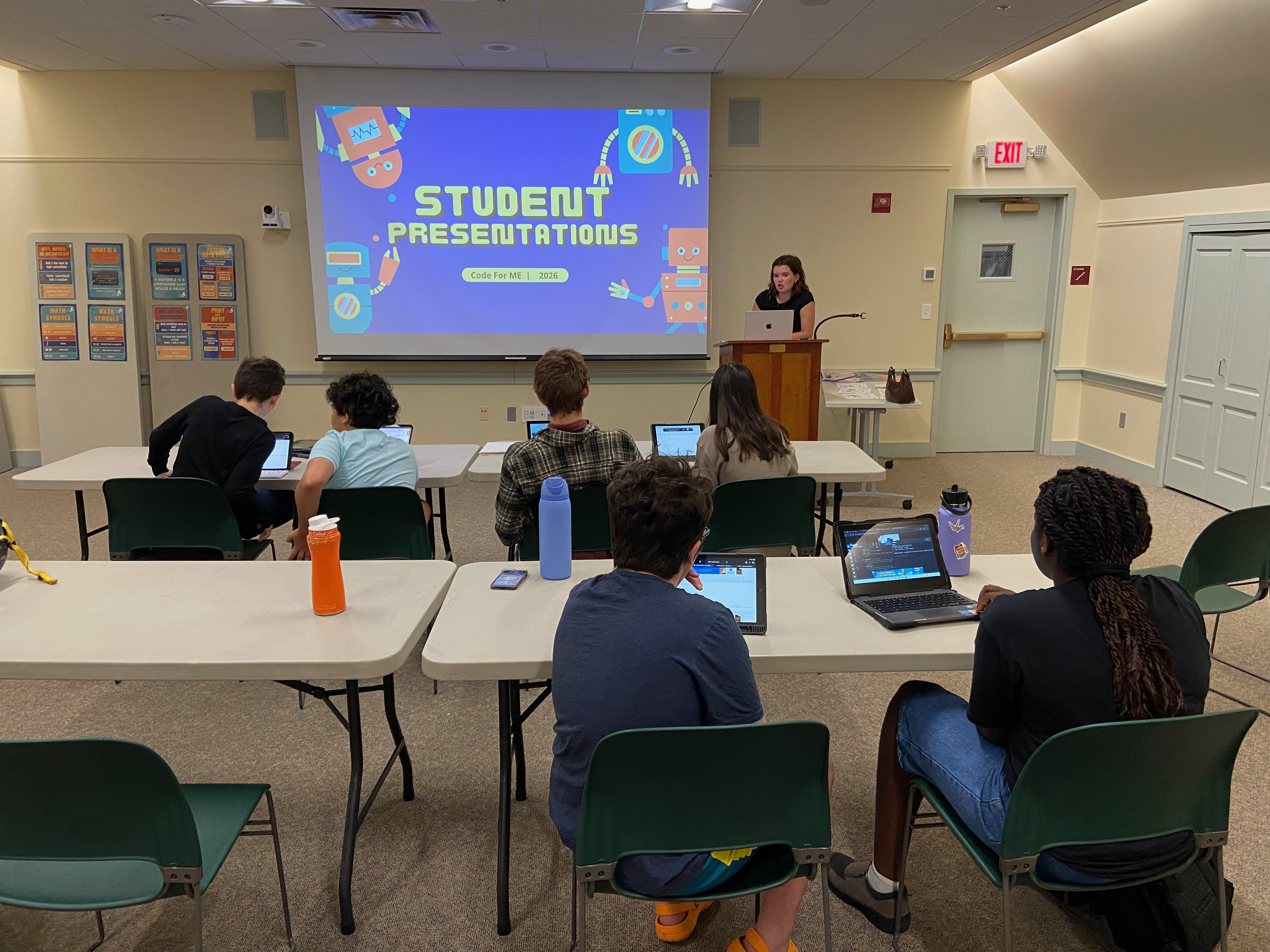
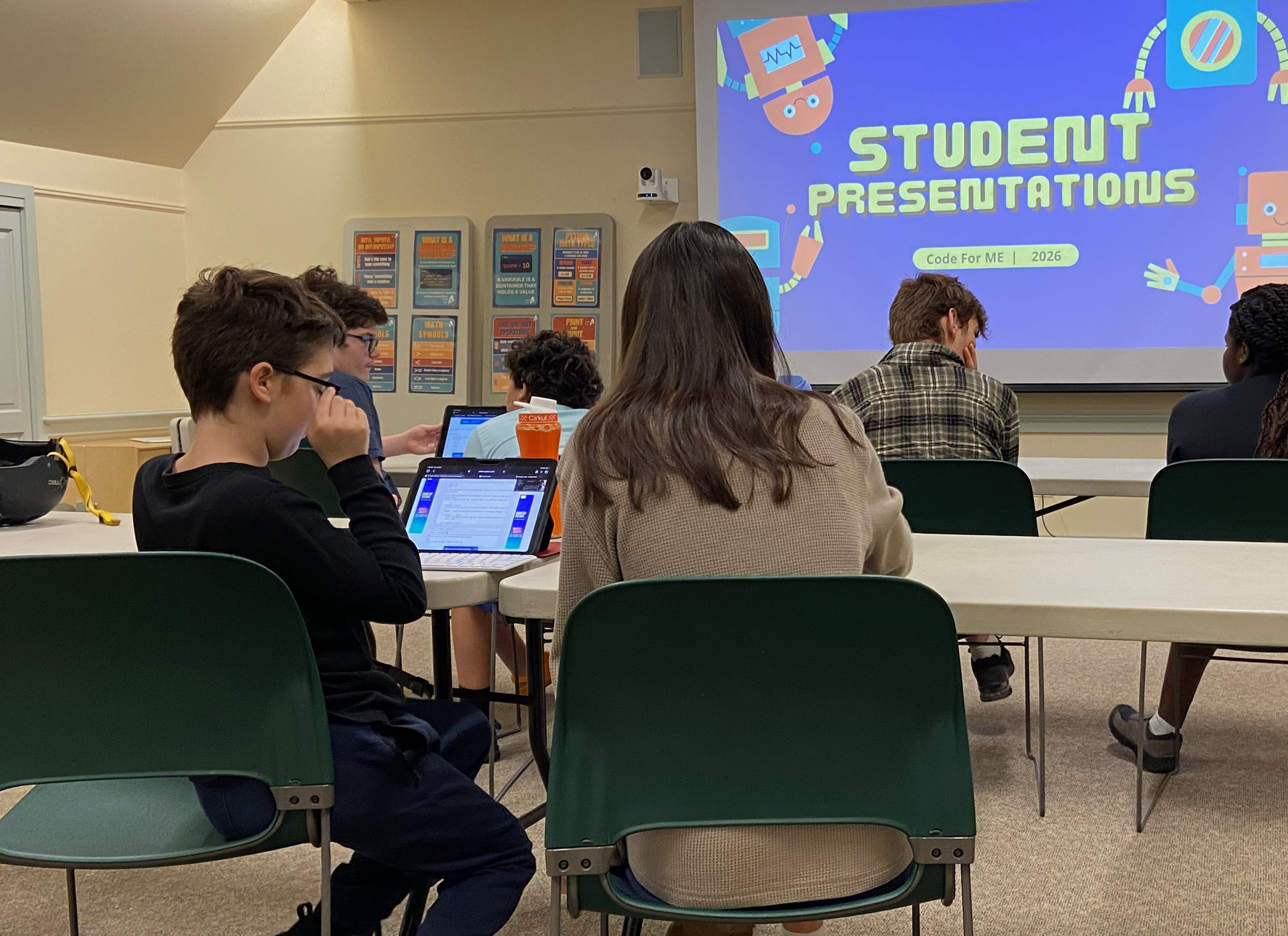
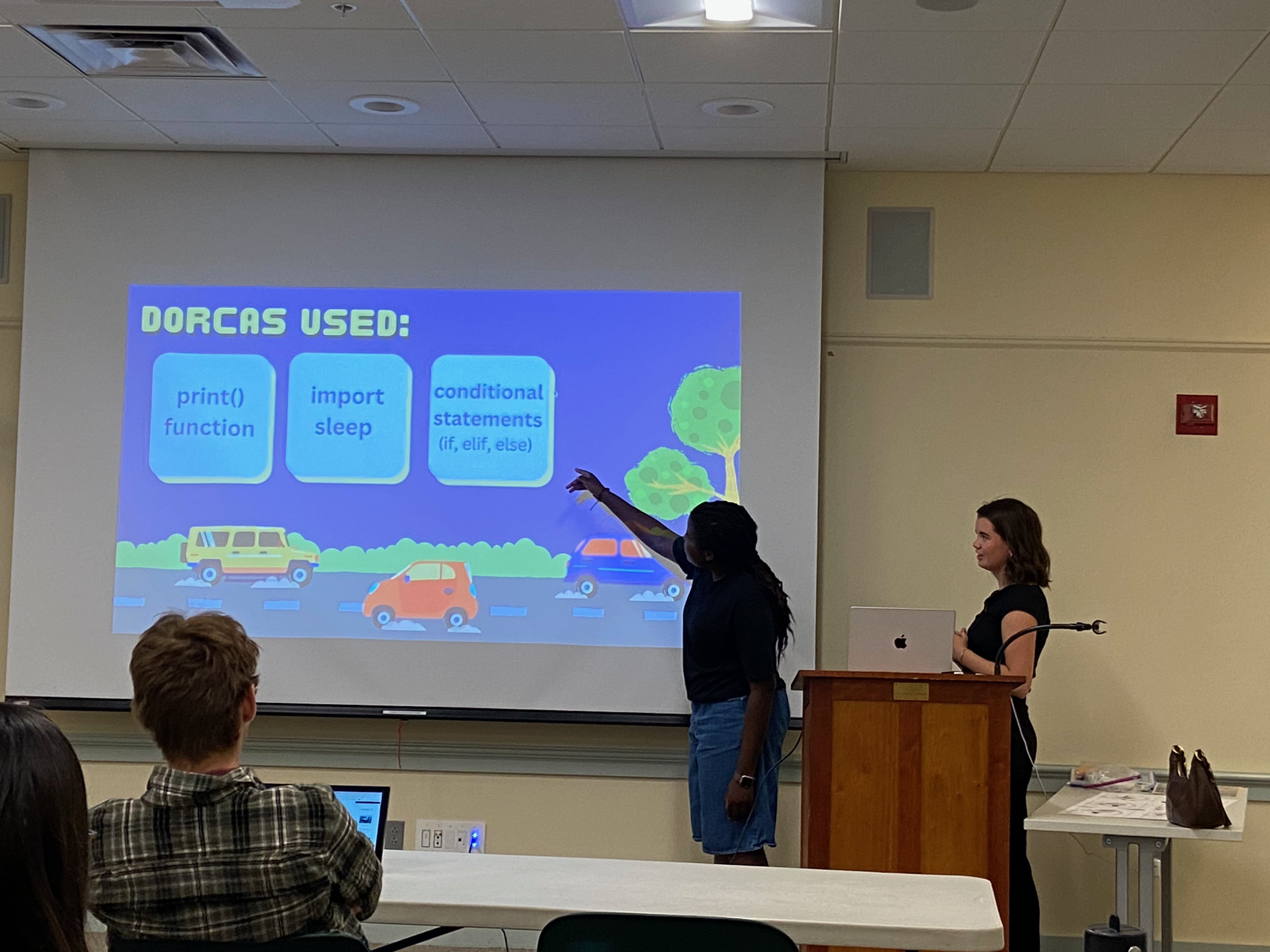
Intro to Python Camp
Students in our Intro to Python class spent the week learning the basics of Python through hands-on projects. Our goal is for students to leave understanding how programmers and computers communicate through code.
Reaching more
classrooms.
This July, Mrs. Willis brought Code For ME to the CS Summer of Fun, where she presented our work and curriculum to educators from across Maine.
Connecting with teachers gives us the opportunity to share resources, exchange ideas, and help bring accessible computer science education into more classrooms.
CS Summer of Fun.
Sharing Code For ME with educators and expanding the conversation around accessible computer science education.
A place to
code, create,
and experiment.
We’re building a free Python sandbox that gives students a simple place to write and run real code directly in their browser.
No downloads. No complicated setup. No ads. Just a space where students can try an idea, make a mistake, change their code, and try again.
Try the Python Playground →
What is a sandbox?
Think of it like a playground for code. Students can write Python, run it, see what happens, and experiment without needing to install anything.
Made for classrooms.
The sandbox can be used alongside lessons, activities, and future Code For ME workbooks so students have somewhere to actually practice what they are learning.
And Byte can help.
Students and teachers can ask Byte questions, get explanations, and work through coding problems when they need a little extra help.
Future Code For ME workbooks + the sandbox will work together — giving students a guided lesson on the page and a place to immediately put their new skills into practice.
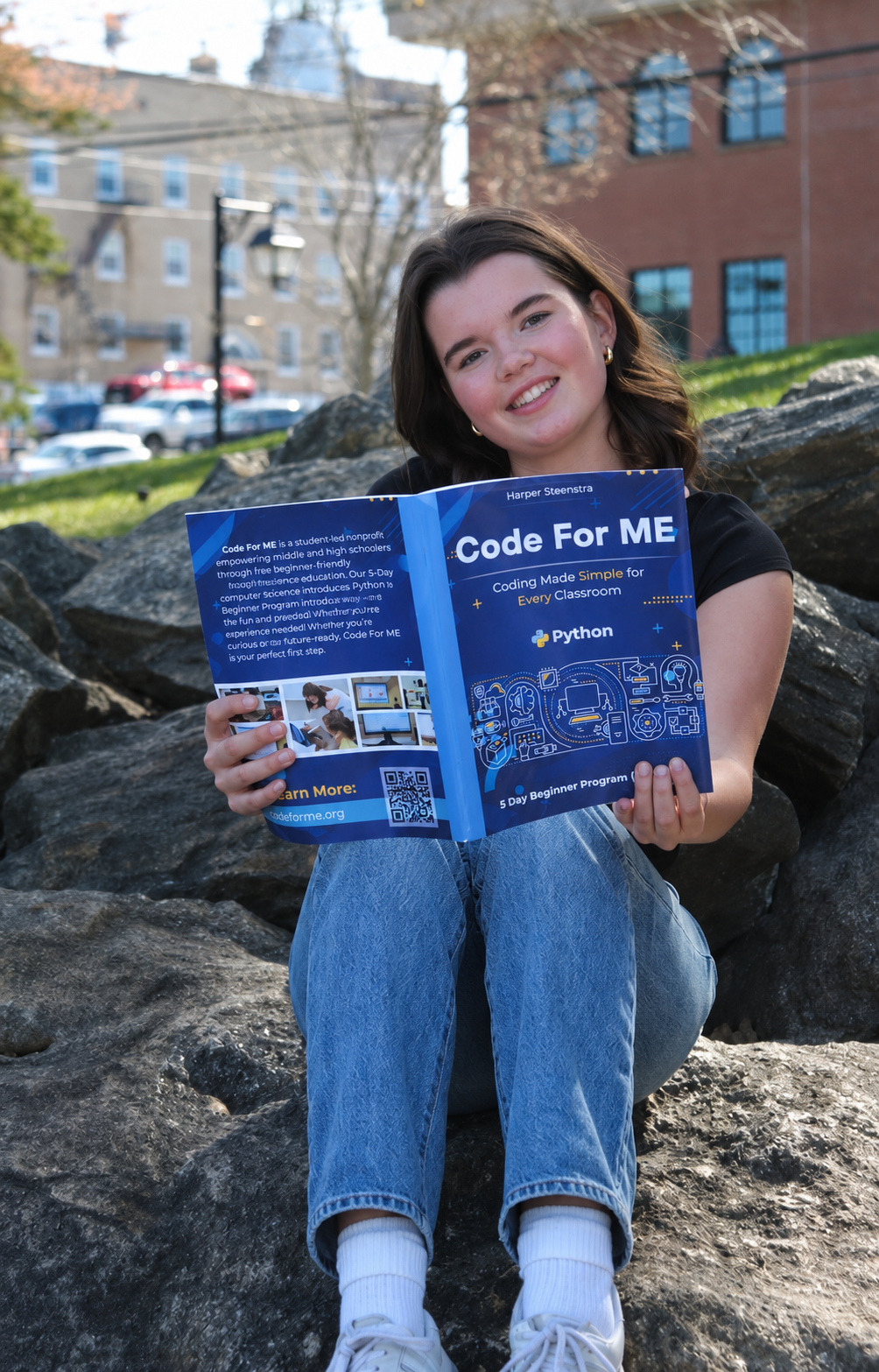
Meet the Code For ME Textbook.
The same curriculum we're sharing with teachers across Maine is now available for classrooms, clubs, and independent learners.
Clear, approachable lessons designed to make programming less intimidating.
A resource teachers can actually bring into their classrooms and use with students.
Every purchase helps support accessible computer science education for Maine students.
We want to see what your students are building.
Please send us photos of your class, projects, code, or anything your students create with Code For ME. We would LOVE to feature your classroom!
Learn to code.
Right in your browser.
We’re still working on our full Code For ME course app, but we wanted to give students a little preview. For now, our website has six mini lessons where students can practice coding on their own.
Getting Started
Your first step into programming. Learn what code is, how programs work, and write your first Python command.
print("Hello, Code For ME!")From there, we kept building
Our newest camps brought two completely different sides of computer science together: building for the web and continuing with Python.
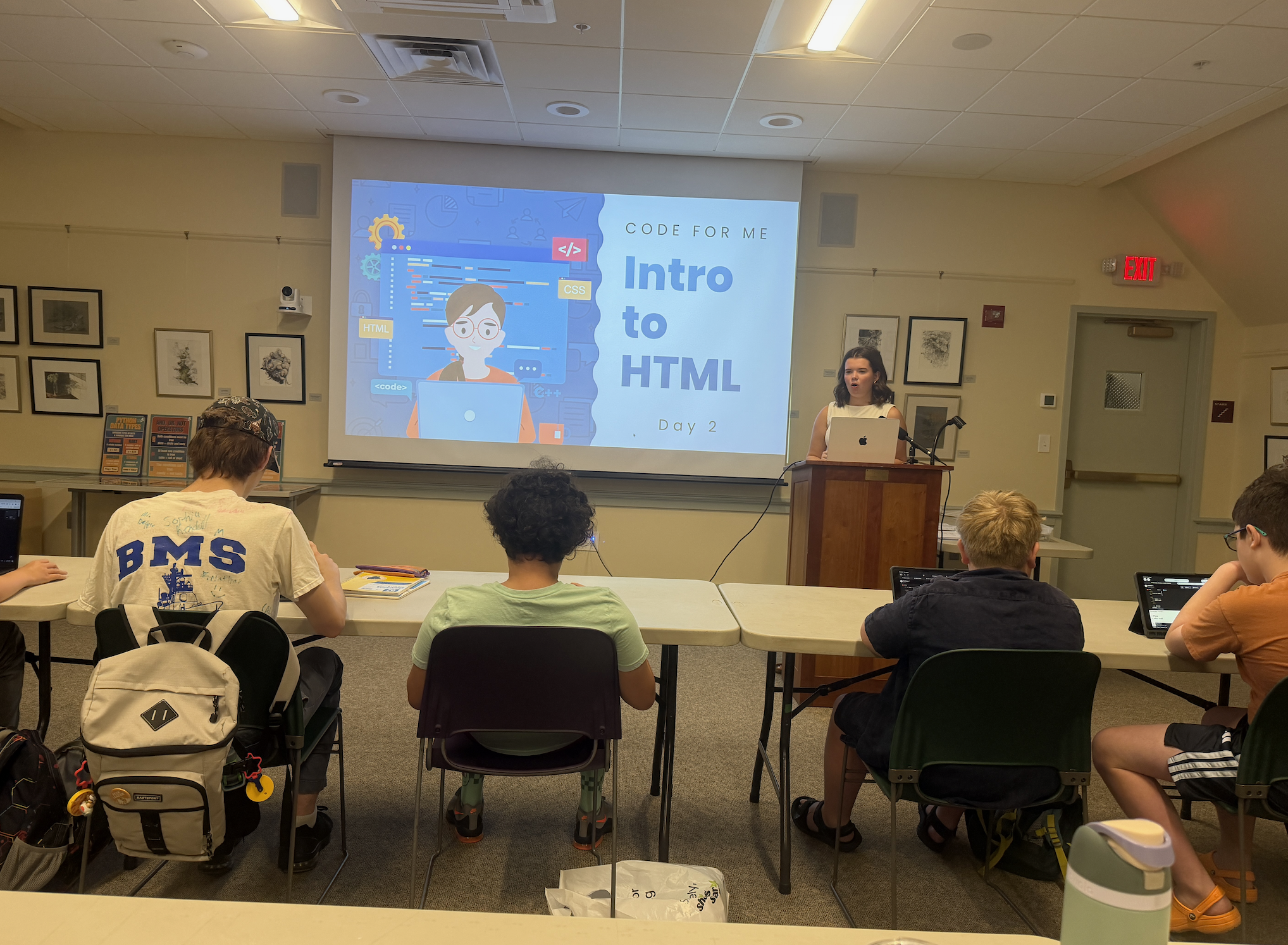 </> WEB DESIGN
From a blank page to a website.
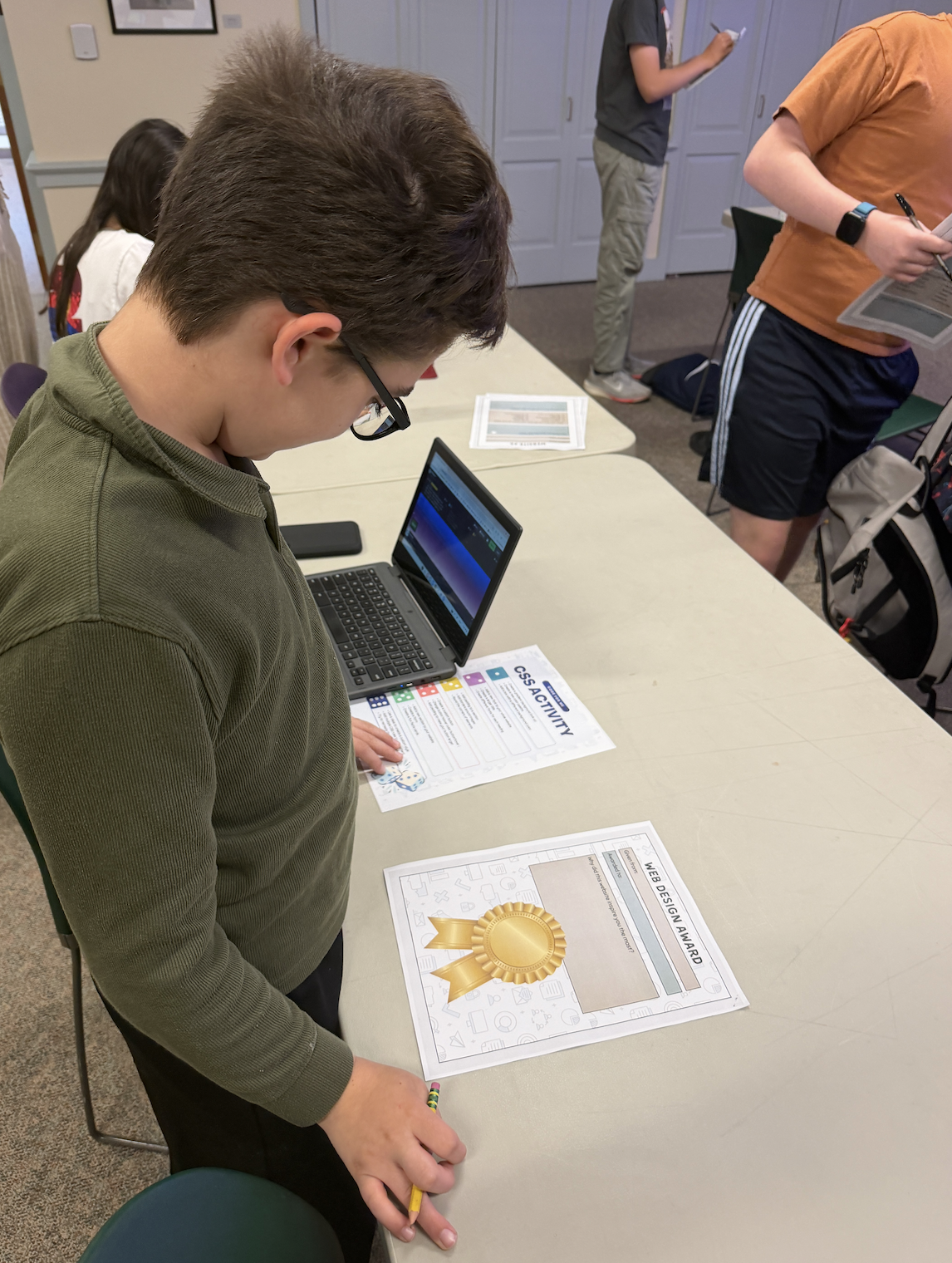
Students learned how websites are structured using HTML and transformed plain pages with CSS and design.
 PYTHON 2.0
Students continued their Python skills.
Students who completed Intro to Python were able to take their skills further with more advanced concepts and real-world programming challenges.
What happens when Python meets the universe?
This summer, I also had the opportunity to take Python far beyond the projects we normally build in camp.
At Brown University, I used Python and machine learning as part of a research project exploring how numerical data can be used to identify distant quasars using Gaia astronomical data.
I worked with two different machine learning models (Logistic Regression and a Random Forest Ensemble) to see whether computers could distinguish quasars from Milky Way objects.
This is a demonstration that Python isn't just for games, calculators, or text display. The same language our students are learning can be used to investigate questions about the universe.
PUBLIC
Code For ME on Maine Public Radio.
This summer, Code For ME made its way onto Maine Public's radio programming — another really exciting moment for our growing mission.
We're so grateful to have the opportunity to share what we're building with an even bigger Maine audience.
Listen on Maine Public ↗Read the Article